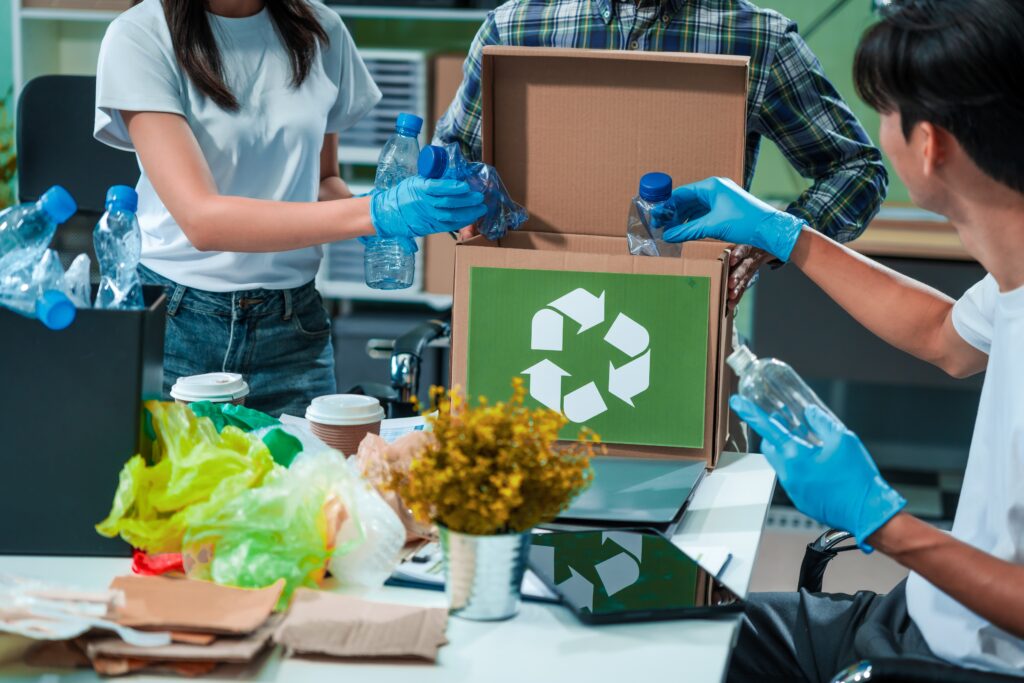
Most everyday items in the world today are made of plastic. Plastic is a compound made of polymers, which is mainly used for packaging materials and single-use items. A large portion of manufactured plastic is not recyclable and accumulates in the environment as waste for hundreds of years. It is known that only 9% of the plastic produced in the world today is recycled. Every year, 8 million tons of plastic accumulate in the oceans, threatening aquatic life and negatively impacting global biodiversity. Therefore, it is important to reduce its consumption and find solutions to avoid the use of plastic.
The guide for reducing plastic waste in schools was created on the initiative of CENN, with the support of the United Nations Development Programme (UNDP) and Norway, in cooperation with the Ministry of Environmental Protection and Agriculture of Georgia, within the framework of the project “Stop Plastic Pollution in Georgia.” This project is part of UNDP and Norway’s broader program “Leadership, Equality, Advocacy, Democracy” (LEAD).