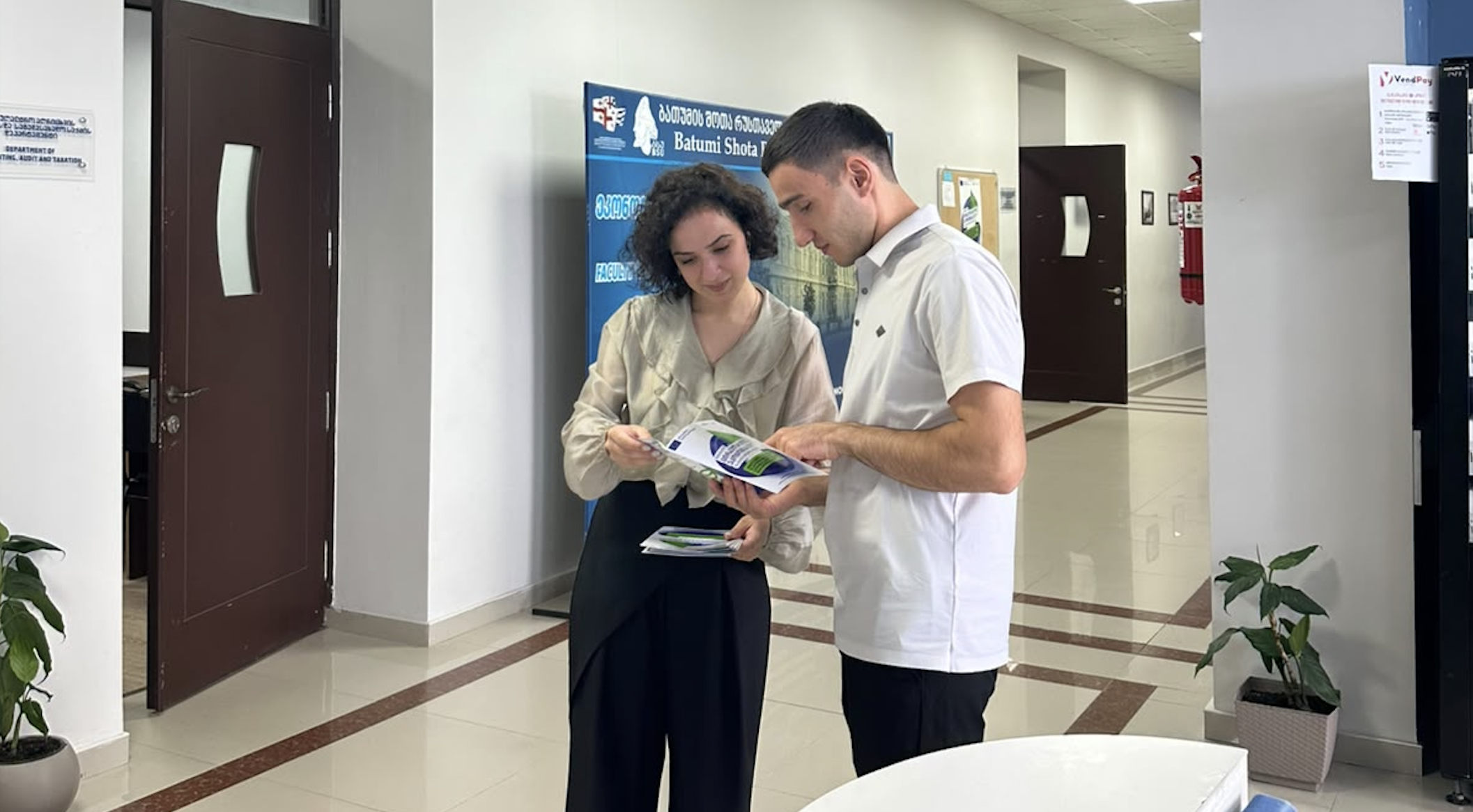
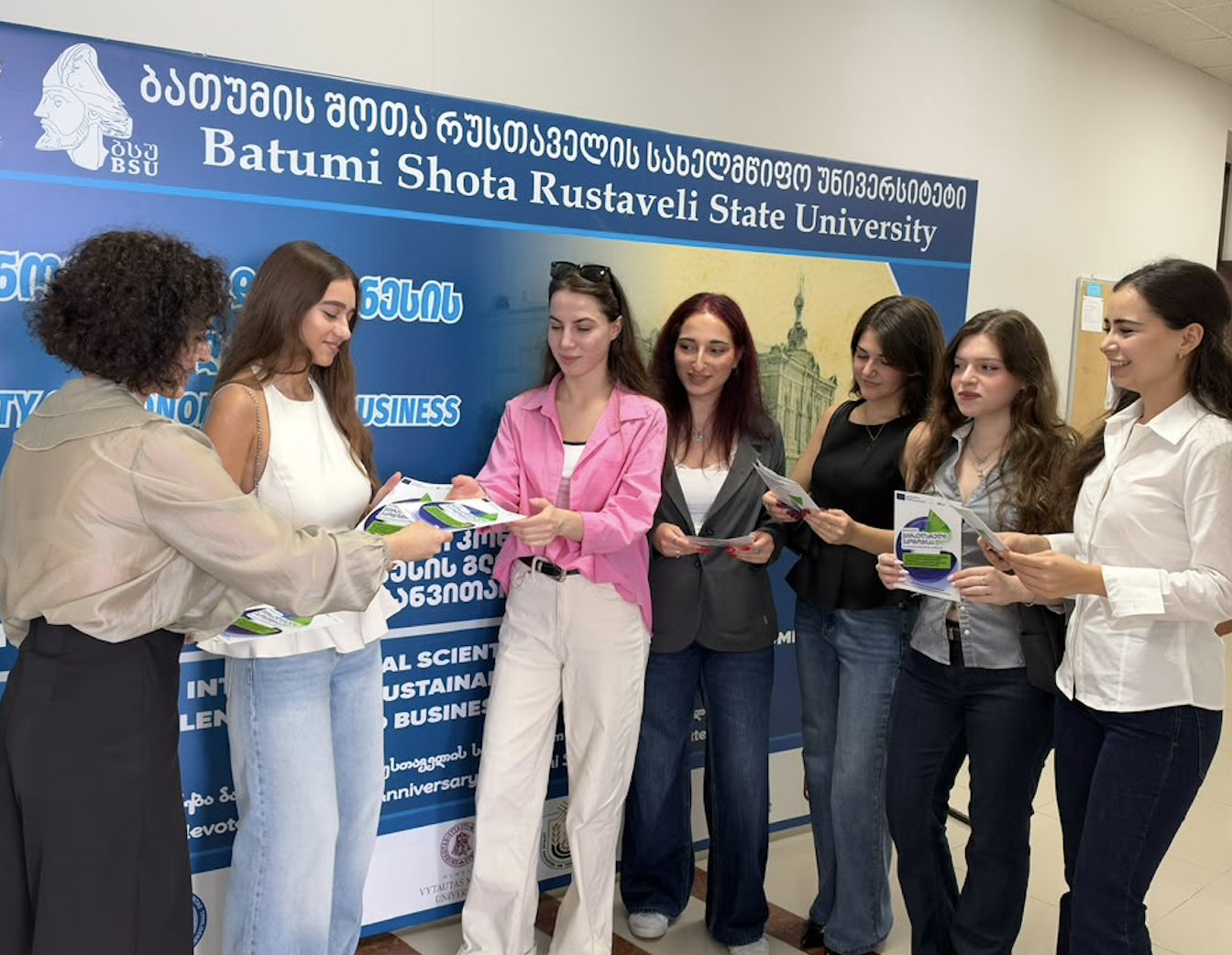
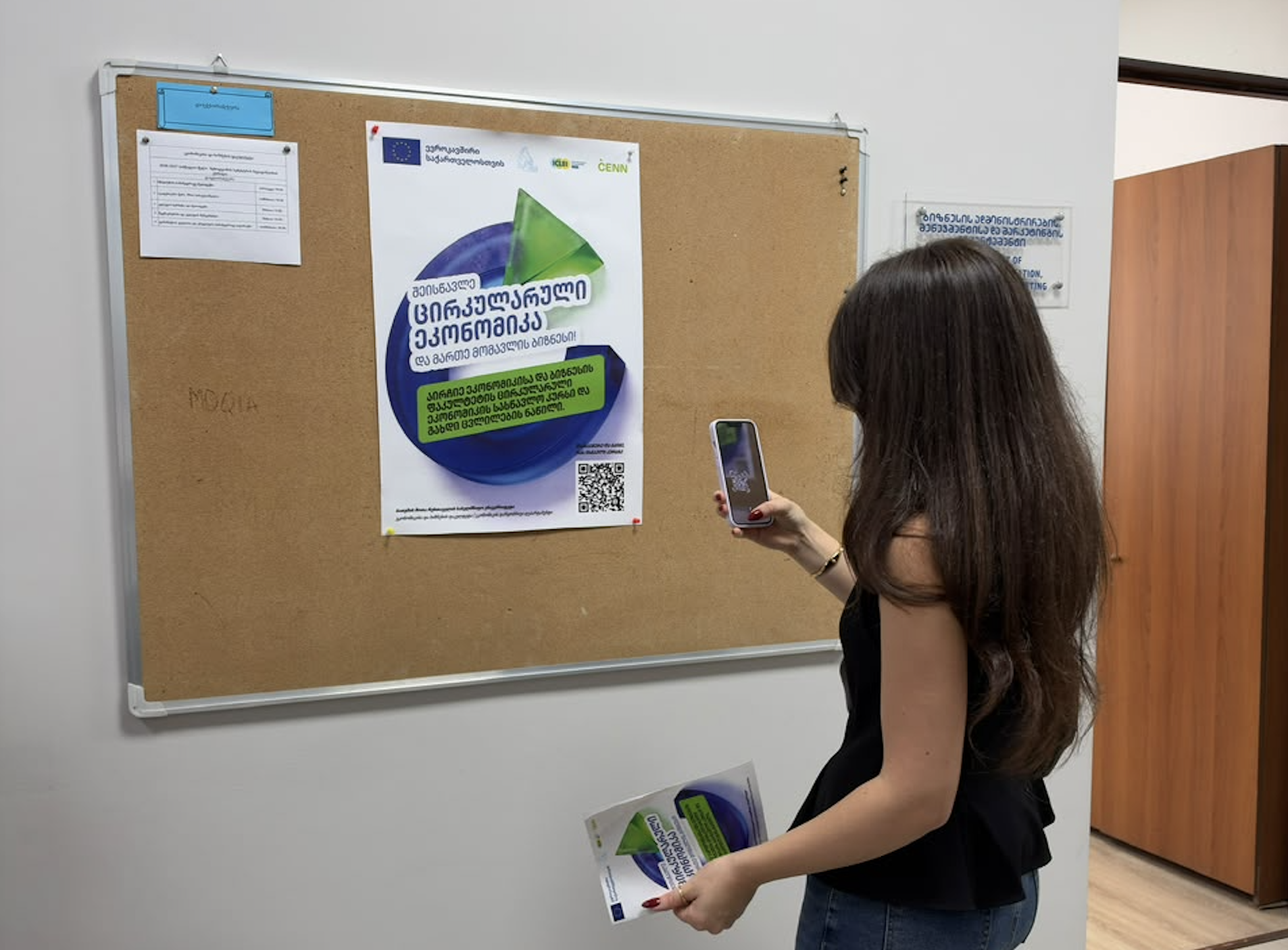
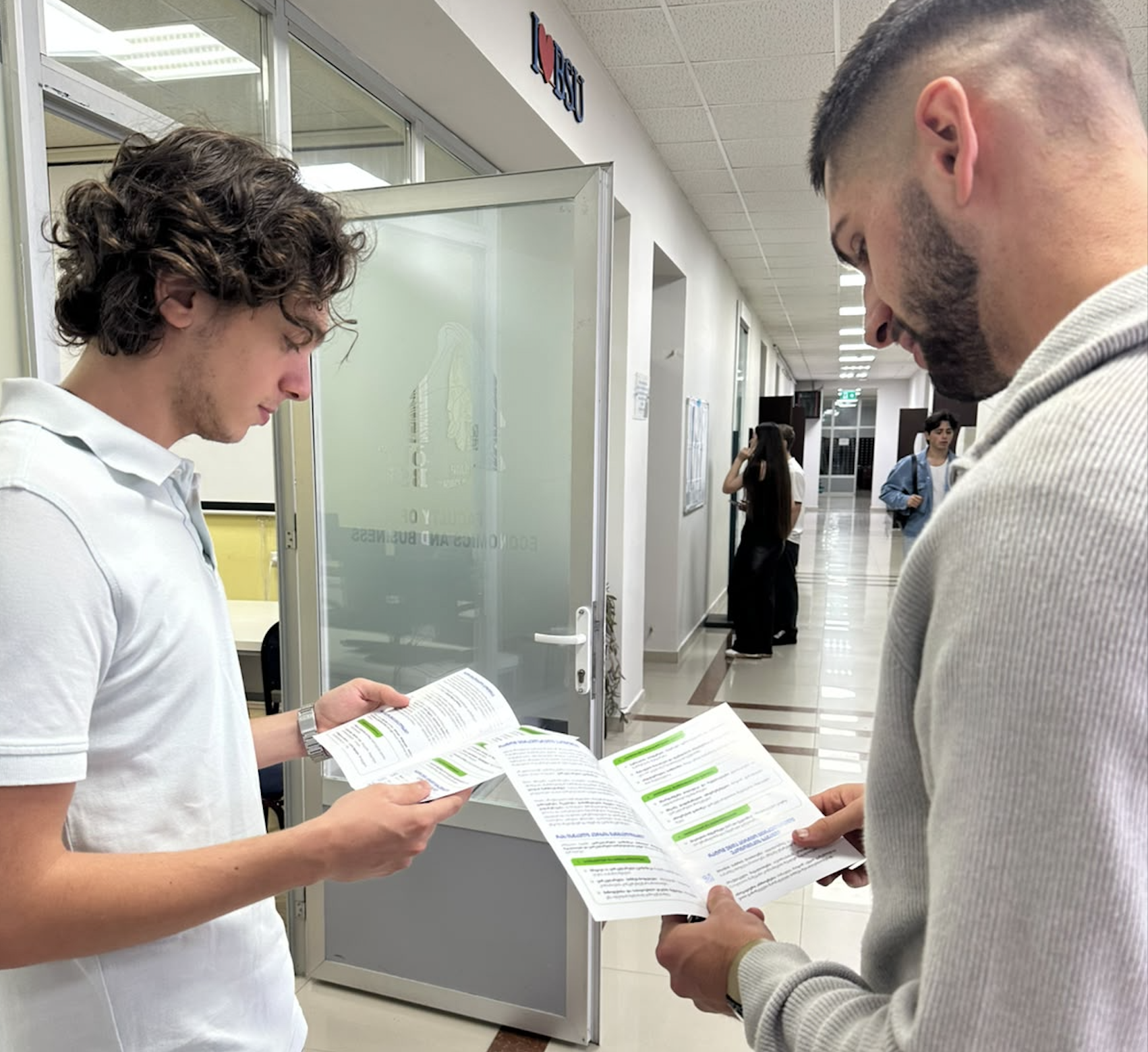
Batumi Shota Rustaveli State University (BSU) responds to the global priorities of efficient resource management and sustainable development in the modern world. In cooperation with CENN and with the support of the European Union, the university offers students a brand-new opportunity. Starting in 2026, a new bachelor’s course in circular economy was launched at the Faculty of Economics.
As BSU Rector Tite Aroshidze noted, integrating the circular economy direction into the educational process is an important step: “The current economic environment requires that a future specialist be able to understand the issues of efficient resource use, environmental responsibility, and long-term sustainability alongside economic activity. Students are given the opportunity to get acquainted with an approach to economic development that focuses not just on the consumption of resources, but on maximising the retention of their value, waste reduction, reuse, and innovative business models. This is especially important for students in the direction of economics and business administration, as they will make decisions in both the private and public sectors in the future.”
What are the new additions and accents in the curriculum?
According to Professor Natia Tsiklashvili, Dean of the Faculty of Economics and Business, this brand-new study course and supplementary reading materials, developed in cooperation with CENN, focus on several main aspects: “The fundamentals of circular economy and business models, value chains in various sectors, supportive policies for circular economy in Georgia and other leading countries, and, most importantly, the importance of modern technologies in the development of circular economy.”
Even though the course was created at the Faculty of Economics and Business, it is not restricted only to students of a single program. As the Rector explains, students from any program who are interested in the circular economy can choose the circular economy study course as free credits.
Importance for the Labour Market and Students
The accents of the labour market are changing, and legislation regarding businesses is becoming stricter from an environmental perspective; accordingly, requirements for personnel are also growing.
As Natia Tsiklashvili notes, this course gives students the opportunity, alongside theoretical knowledge, to get acquainted with real examples from leading companies, study the market, work on circular ideas, and receive information about funding instruments for them: “Those students who complete this course will meet the modern demands of the labour market well-prepared and will be more competitive,” she says.
University’s Future Vision and Plans
As Tite Aroshidze notes, BSU’s mission is to promote the country’s sustainable development, population social well-being, environmental safety, and economic stability, which is why the university expresses readiness towards all such initiatives: “BSU’s strategic development plan envisions the continuous development of educational programs and the consideration of labour market demands within them. Accordingly, we think that issues of circular approaches can gradually be reflected in various educational directions. The introduction of the circular economy course is not just the addition of one new study course; it is an example of how a university should respond to ongoing changes in the economy and how it should connect education to the real needs of the country and the region.”
About the Project
This initiative is implemented by CENN within the framework of the EU-supported project “Circular Cities and Regions in Georgia”. The project covers the Kakheti and Adjara regions and promotes the creation of green value chains and the establishment of circular economy principles at the local level.