The linear economic model “take, use, dispose” can no longer keep pace with the scale of today’s environmental challenges. Against this backdrop, educational institutions take on a special role: a university campus is both a place where circular ideas can be tested in a real-world setting and a space that shapes the habits and values the next generation will bring to resource use.
Below we’ll introduce you to a few university examples; you can learn more on this topic from our brochure, which you’ll be able to download at the end of this article.
Reuse and Donation of Resources
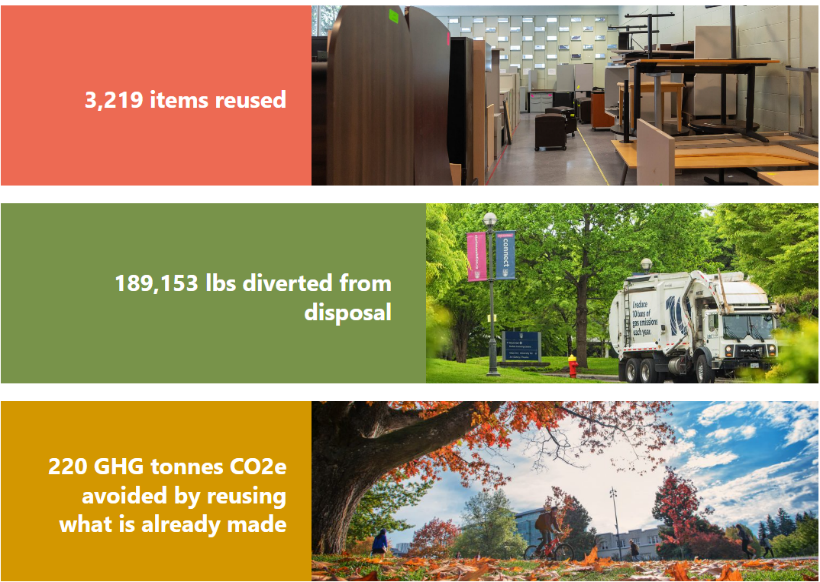
The University of British Columbia (UBC) runs a furniture reuse program: usable furniture and equipment left behind in faculties and departments is collected, sorted, and redistributed through the Zero Waste Market. The program serves clear goals — reducing furniture waste on the Vancouver Point Grey campus to zero by 2030, and cutting the cost of buying new furniture.
Washington University in St. Louis applies a similar but more systemic model: surplus furniture, lab equipment, and office inventory are centrally assessed and logged in a shared database. If there is no internal demand, items are passed on to local schools and NGOs — thereby generating environmental and social benefits.
A Culture of Repair
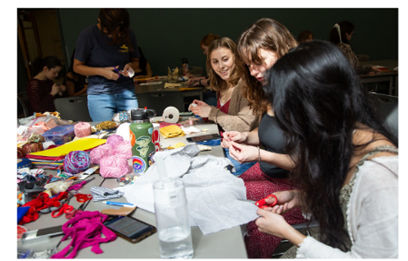
The University of Warwick’s Repair Café is an open platform where students, staff, and the wider community work alongside volunteer specialists to fix damaged household items, electronics, textiles, and accessories (higher-risk items such as phones, laptops, bicycles, microwaves, and toasters are excluded). The core idea is knowledge-sharing — participants learn to diagnose and repair items themselves.
Swap and Redistribution Spaces
University of Georgia’s “Swap Shop” — a student-led initiative where anyone can drop off items they no longer need (study materials, small household appliances, clothing) and take what they need for free. A key detail is location — drop boxes sit right next to lecture halls, making donation effortless between classes.
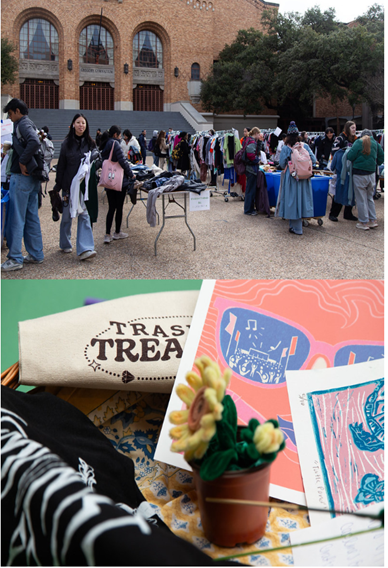
University of Texas at Austin’s “Trash to Treasure” — running since 2005, this project sells items collected at the end of each semester for just $1 at “pop-up” sales. All proceeds are reinvested into environmental initiatives on campus. A related program, “Making Amends,” turns damaged items into new products through student workshops.
University of Waterloo’s “Free Store” — a space built on the principle “take what you need, completely free,” paired with a Seed Library — a system for sharing and “borrowing” seeds.
The "library of things"
The “library of things” model appears in several variations:
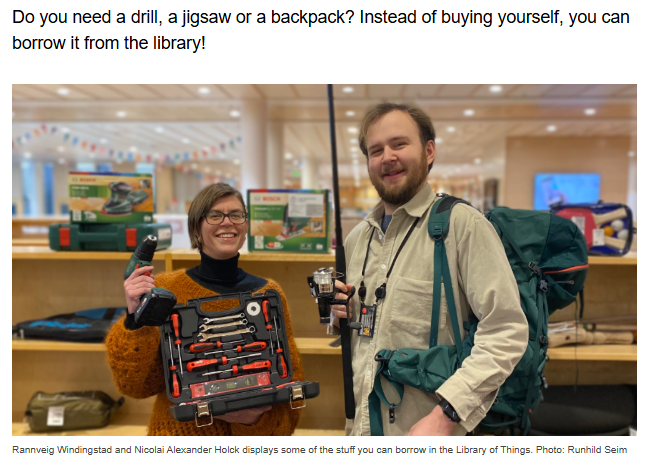
At the University of Oslo, students can borrow work tools, camping gear, and sports equipment free of charge, for a 7-day period with no extensions allowed.
The Goethe-Institut Georgia’s “#ნივთეBib” brings a similar model to the local context — its collection of 25 items is organised into four categories: DIY, leisure/sport, social media, and household.
Seton Hall University’s SHUShelf is a circular textbook exchange: students turn in books and receive new ones in proportion to what they contributed. This is complemented by “Note Reuse” — sharing lecture notes in exchange for circular credits.
These practices don’t require major investment. Most start with a simple organizational decision: one box, one shelf, one page on an online platform. What they share is a commitment to extending the life cycle of campus resources, rather than letting an item end up in a landfill after a single use.
Check out the brochure prepared by CENN with EU support, where you can read in more detail about the ideas that turn seemingly useless items or waste into new resources.