In the age of consumerism, the circular economy is rapidly gaining momentum and the process may already be irreversible. The circular economic model seeks to minimize the consumption of natural resources and waste generation. The world is gradually realizing that products should be designed for longevity. Equally significant is their capacity for repair or renewal, which entails their potential for recycling and conversion into a new resource. In continuous endeavors to reimagine the current economy as a circular model, both producers and consumers play pivotal roles.
Principles of the circular economy
The growth of a circular economy requires consensus on certain underpinning principles. These may include:
- Resource acquisition, which, in a circular economy involves the procurement of recycled/renewed materials rather than natural raw materials;
- Design, which involves a focus on durability, adaptability and reusability;
- Maintenance and repair – a business initiative aimed at repairing and reusing a damaged product rather than discarding it, either for its original purpose or an alternative use;
- Refurbishment and reuse;
- Recycling – disassembling a material to create a new product or material;
- Circular supply chains – using renewable, biodegradable, or recycled materials in production processes;
- Energy recovery – generating energy from waste when materials are unsuitable for reuse or recycling.
Stages of the circular economy and the difference from the linear economic model
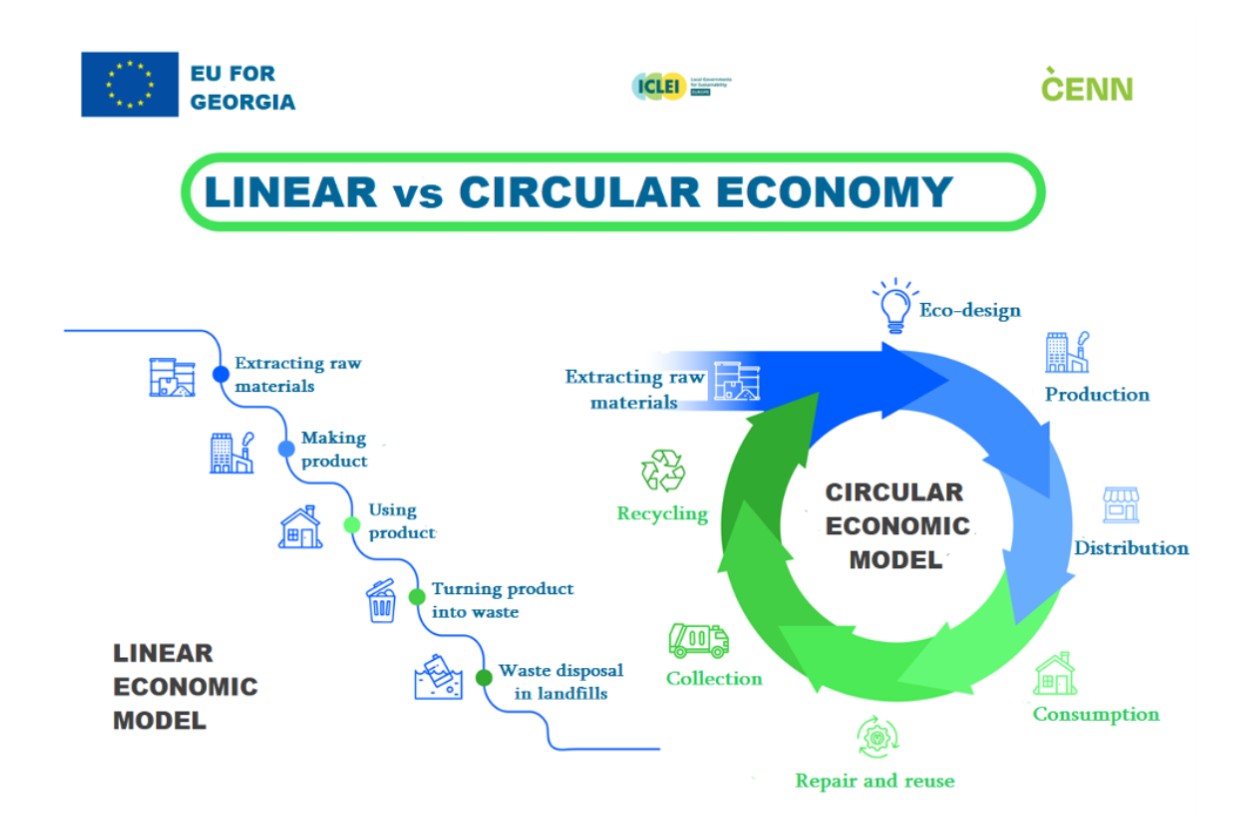
Infographic: Comparison of linear and circular economic models. CENN
Design as a rethinking stage
Before we delve into the role of design in the circular economy, it is essential to define the concept of design itself. Everything in our environment, whether it be clothing, buildings, or any other object, is the product of human creation. The development of a new product should consider not just its intended function but anticipated outcomes as well, including any possible harm or benefit to the environment.
This is where the cornerstone principles of the circular economy come into play, focusing on eliminating waste, reusing materials, and regenerating, or restoring nature. Regrettably, most goods today are produced using a linear rather than a circular approach. Consequently, modern reality compels us to rethink the concept of design and outlines the subsequent stages of the circular design process:
- Understand – understanding user needs, contemporary challenges, and systems
- Define – identifying potential design challenges while developing a product
- Make – developing different versions and alternatives
- Release – launching and delivering the finished product to the consumer
At every stage of the design process, it is vital to concurrently assess the user’s needs and the product’s potential environmental impact. This encapsulates the very essence of circular design and understanding/analyzing it enables us to devise strategies and develop the best alternatives that everyone — humans and the environment alike — can benefit from.
From product to service
The strategy may include converting a product into a service. Certain products may be returned to the manufacturer and businesses ought to provide this option.
Product longevity
Extending a product’s lifespan allows the consumer to use it for as long as possible, which is one of the three core tenets of the circular economy. It requires innovative approaches to adapt the product to the consumer’s ever-changing needs.
Materials
What materials should be used in producing items? The question remains perennial. Not all materials are suitable for the circular economy. Some may contain chemicals that are harmful to humans or the environment. By selecting safe materials, you ensure that the consumer receives the best on offer.
Dematerialization
This is an intricate term but rather simple to decipher — find a strategy in production that helps reduce resources. This may involve shifting from tangible items to virtual products. Spotify and Netflix are excellent illustrations of this approach.
Modular design
This technique allows the repurposing of your own manufactured items to either create new ones or renew existing items for total reuse.
All of the techniques above are grounded on the principles of future design. Being at the core of the circular economy, it directs manufacturers on how products should be developed, modified, and destroyed. Adopting circular design will contribute to a sustainable, efficient, and resilient future that we collectively shape.