Food industry waste, traditionally viewed as a low-value resource, is gaining new functional significance with the advancement of modern design and materials science. A striking example of this transformation is the sunflower seed husk oil dispenser – a product that represents a harmonious synthesis of circular economy, biomaterials engineering, and cultural narrative, making it an exceptional innovative solution.
Sunflower Husks: From Waste to Raw Material
In the sunflower oil production cycle, the seed husk is the most abundant waste product. During the oil extraction process, the husk loses its fat content, which is why it is often burned for energy or sent to landfills. The structural composition of the sunflower seed husk – its high content of cellulose, lignin [1], and hemicellulose [2] forms a solid foundation for creating durable natural materials. These characteristics define the potential of the husk as a source of alternative raw materials.
Materials Engineering and Production Technology
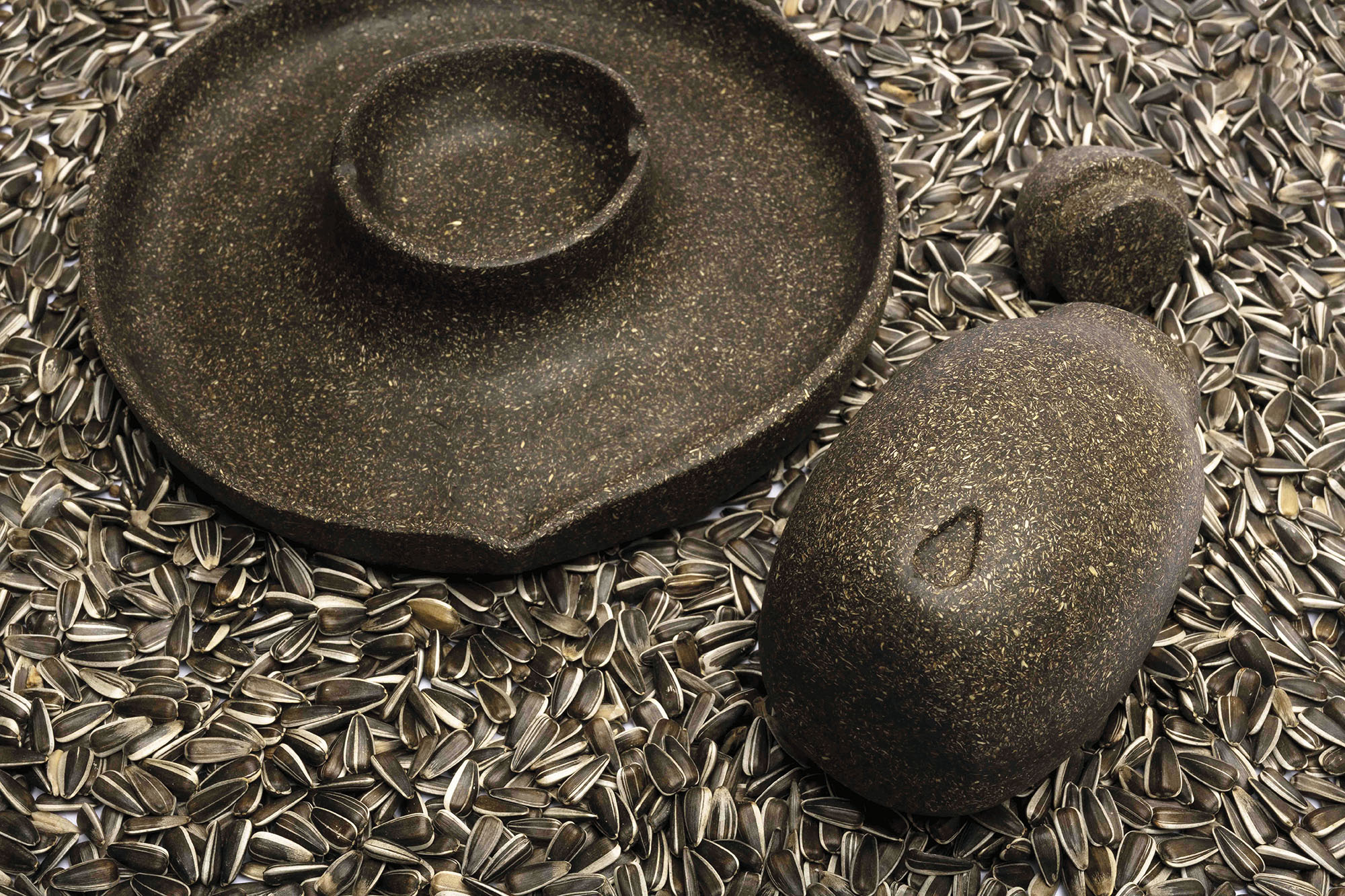
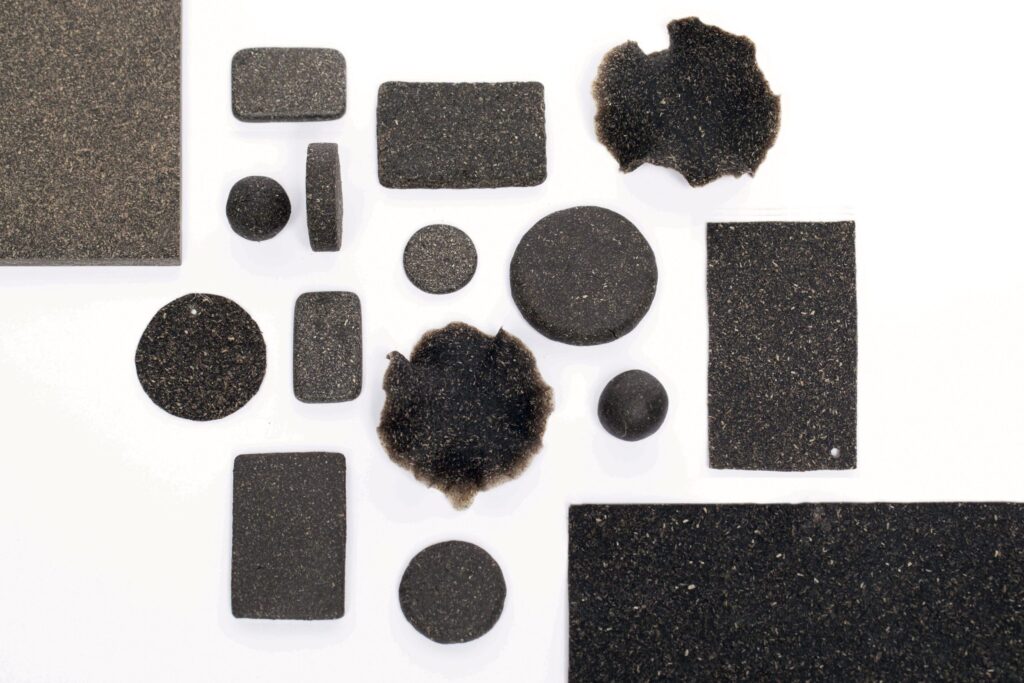
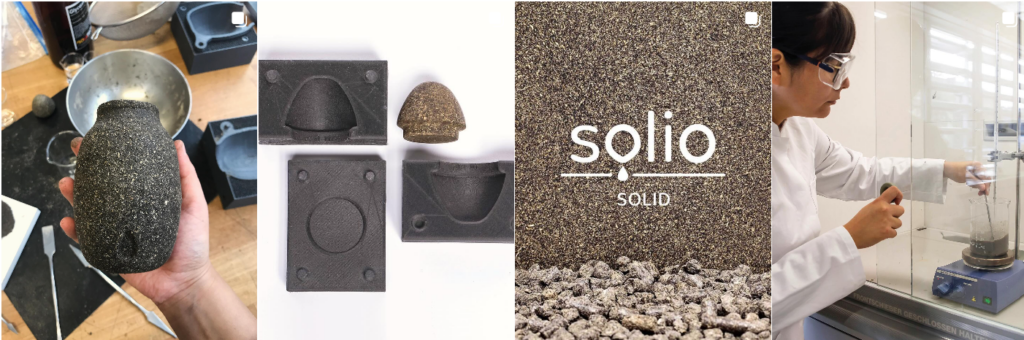
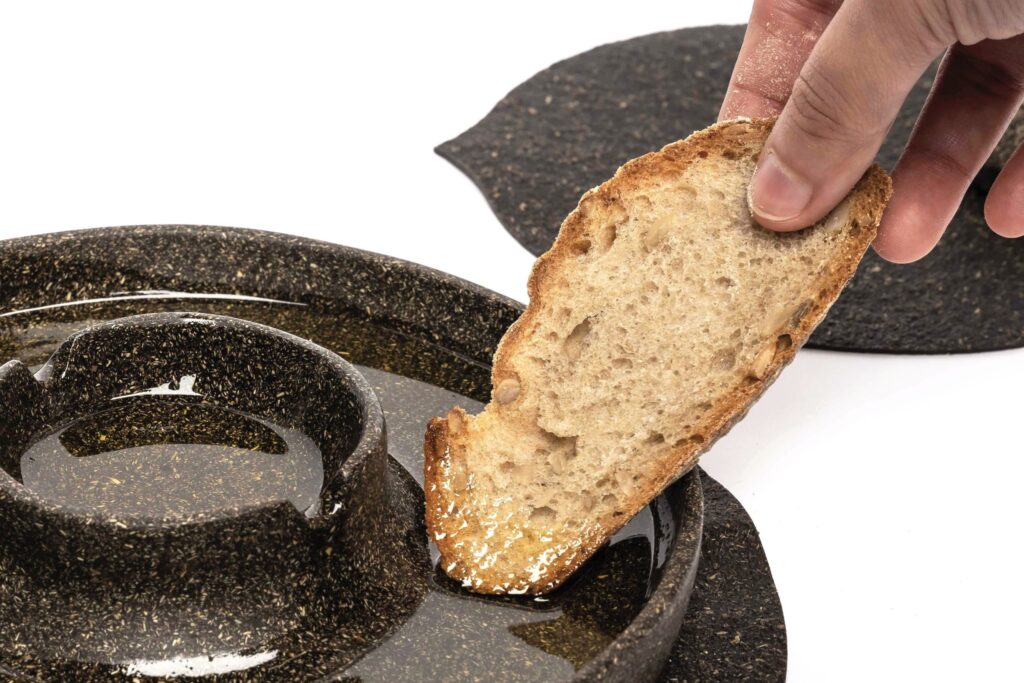
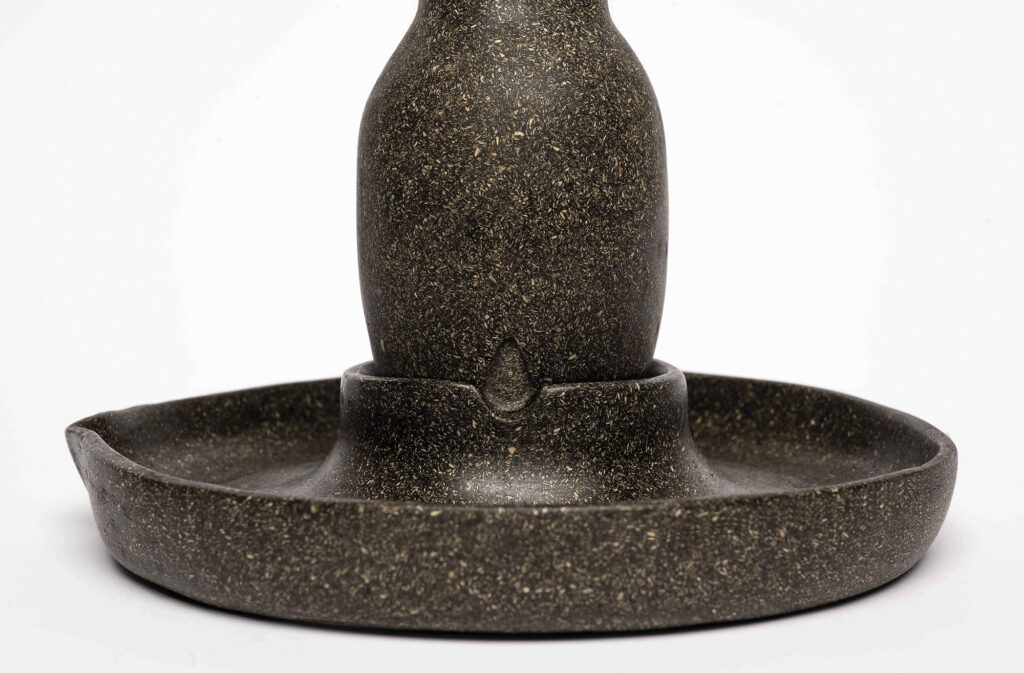
The path to the practical realisation of this potential lies in the materials developed by designer Kathrin Lopez: Solio Solid, a sturdy, plastic-like composite material, and Solio Soft, a flexible material with a texture resembling organic leather. The materials are formed using modern technologies, hydraulic presses, and specialised 3D moulds, after which the item is coated with sunflower oil. This allows for the creation of sophisticatedly shaped objects from waste. This simple yet effective method ensures the material’s water resistance while simultaneously providing a natural sheen, making the object visually appealing.
Cultural Context and the "Solio" Concept
The product concept is not limited to material and technology alone; it also encompasses cultural and historical context. The sunflower held symbolic significance in ancient Aztec and Inca civilisations and was often used in ritual practices. Taking this historical parallel into account, “Solio” was created – an oil tasting set that includes a bottle, a bowl, and a bread and serving board. The name, which is a combination of the Italian words “sole” (sun) and “olio” (oil), emphasizes both the material’s origin and its functional purpose.
Biodesign and Sustainable Development
From a technical standpoint, such a product represents an interdisciplinary synthesis of biodesign and materials science. The use of sunflower husks reduces the volume of generated waste and, at the same time, creates a low-carbon footprint, a biodegradable alternative to traditional plastic. Furthermore, local production of biomaterials reduces the need for transportation and promotes regional economic development.
A New Logic of Resource Perception
The dispenser made from sunflower husks is an example of how agricultural waste can be transformed into a high-value product. This approach changes the logic of how we perceive resources—the use of a resource is no longer considered the end of a process, but rather the beginning of new, functional systems.
Notes: [1] A polymer compound found in the cell walls of fibrous plants. [2] A substance similar to cellulose found in the cell wall serves as a stored nutrient.