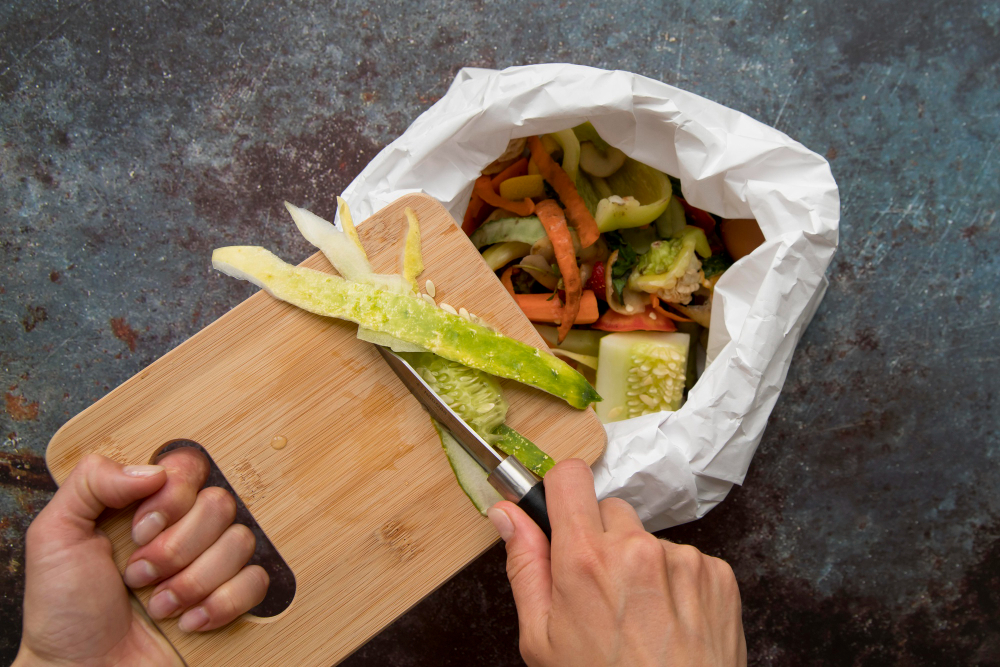
Every year, Europe throws away 58 million tonnes of food — that’s about 130 kilograms per person — with a market value of €132 billion. Yet, at the same time, over 42 million people across the EU cannot afford a quality meal every second day.
Globally, the picture is no better. The UN Food and Agriculture Organization (FAO) estimates that around a third of all food produced for human consumption is lost or wasted every year. In 2022 alone, 1.05 billion tonnes of food waste were generated worldwide — 60% from households, 28% from food services, and 12% from retail. That means one-fifth of all food available to consumers ends up in the bin.
Why Food Waste Is Everyone’s Problem
Wasting food isn’t just a moral issue, it’s an environmental and economic one too. The EU estimates that food waste accounts for about 16% of total greenhouse gas emissions from its food system. When food is wasted, all the energy, water, and labor used to produce it are also wasted.
Reducing food waste is therefore central to achieving the United Nations Sustainable Development Goal (SDG) 12.3, which aims to halve per capita global food waste at the retail and consumer levels by 2030.
By cutting food losses and waste, we can:
- Combat climate change, reducing greenhouse gas emissions.
- Feed more people, redirecting surplus food to those in need.
- Save money, for farmers, businesses, and households alike.
Where and Why Food Is Wasted
Food waste happens at every stage of the food supply chain — from the farm to our forks. In the EU, households are the biggest culprits, responsible for over half (53%) of total food waste, or 69 kg per person each year. The rest occurs throughout the supply chain:
- Manufacturing: 19%
- Restaurants and food services: 11%
- Retail and distribution: 8%
- Primary production (farms): 10%
On the Farm
Losses often occur before food ever reaches the market. Common causes include:
- Pests, diseases, and extreme weather
- Unfavorable market conditions (e.g., low prices or oversupply)
- Strict aesthetic standards, meaning “imperfect” produce is left unharvested
In Food Businesses
From factories to restaurants, inefficiencies add up. Some typical drivers include:
- Overproduction and stock management issues
- Portion sizes that are too large
- Production errors or damaged packaging
- Difficulty forecasting demand, especially in catering
- Strict quality requirements from retailers
At Home
Most of us don’t intend to waste food — but small habits have big impacts. Common causes include:
- Poor meal planning and overbuying, often encouraged by promotions
- Misunderstanding “best before” and “use by” dates
- Improper storage and lack of food management skills
- Low awareness of the environmental and financial costs of food waste
How to Reduce Food Waste
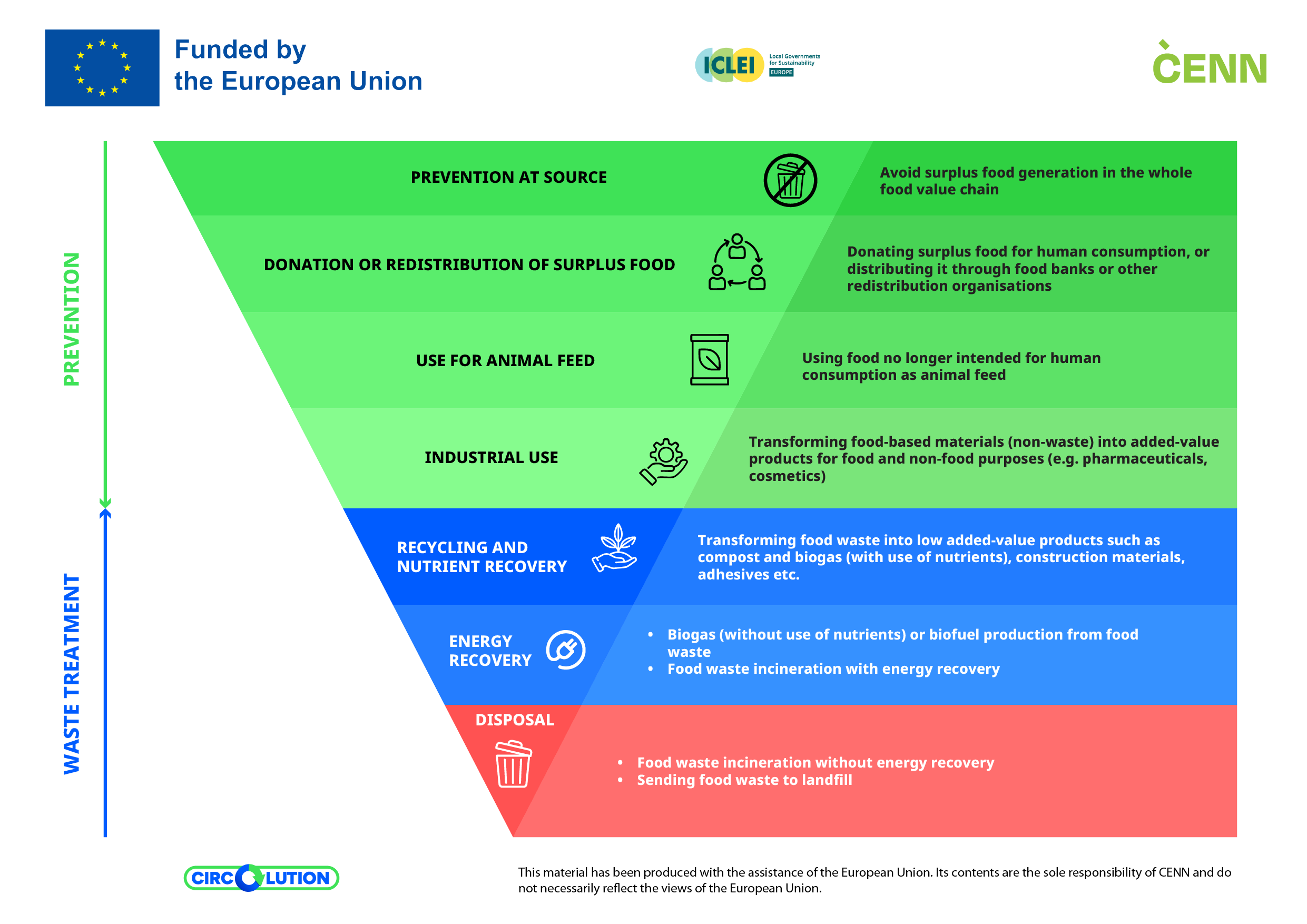
The EU follows the “food use and waste hierarchy”, a framework adapted from the Waste Framework Directive. It prioritizes prevention first, followed by redistribution, animal feed, industrial uses, and finally waste treatment (recycling, energy recovery, and disposal).
Food Waste in Georgia
According to CENN’s studies conducted in 2016 and 2018, approximately 40% of the waste found in Georgia’s landfills is organic, with food waste constituting a large portion of this.
Based on 2014 data, approximately 576,588 tonnes of food waste are generated annually in Georgia, distributed across households, food services, and retail. Household – 101 kg = 403,573 tonnes annually; Food Services – 28 kg = 110,504 tonnes; Retail – 16 kg = 62,511 tonnes.
The main causes of household waste are poor planning and excessive purchasing. This is compounded by low awareness regarding the use of leftover products for composting or preparing new meals, as well as a lack of awareness regarding the correct reading of information on food labels.
In the business sector (food business operators, large retail chains), large quantities of edible food are discarded. This is primarily caused by packaging and quality issues, expired shelf life, over-supply, and consumption habits (e.g., buffet style dining in hotels).
According to estimates, food waste in Georgia could lead to the emission of 797,448 to 996,809 tonnes of CO2 equivalent.
What Can Different Actors Do?
Consumers can better plan their meals, freeze leftovers, and understand date labels.
Farmers can improve harvesting, storage, and distribution practices, and finding new markets for “imperfect” produce.
Food Businesses should better evaluate the economic losses they face. Research from the World Resources Institute (WRI) and WRAP found that for every $1 invested in reducing food waste, companies saved $14 or more.
A Shared Responsibility
Tackling food waste requires a collective effort — from policymakers and businesses to consumers and communities. Awareness is the first step, but action is what drives change.
The EU’s commitment to halving food waste by 2030 is ambitious, but achievable. By valuing food as the precious resource it is — not just a commodity — we can build a more sustainable, fair, and resilient food system for everyone.
The article was prepared with the support of the European Union, within the framework of the CIRCOLUTION campaign. CENN is solely responsible for its content, and it may not necessarily reflect the views of the European Union. The Circularity campaign is part of the “Circular Cities and Regions in Georgia” programme, implemented by CENN with the assistance of the European Union.