Modern retail is moving into a phase where packaging is perceived as a full-fledged resource and becomes an integrated, valuable component of the system – one that requires efficient management, return, and continuous reintegration into the supply chain. This very shift reflects the transformation of the process from a linear “take-make-dispose” economy into a circular model, where waste is converted into valuable raw material.
The initiatives of Carrefour, Tesco, and Ocado echo this process. Although each of them takes a completely different operational approach, all three initiatives are based on the same fundamental principle: extending the life cycle of packaging under strict industrial control.
Closed-Loop System - Carrefour & Loop
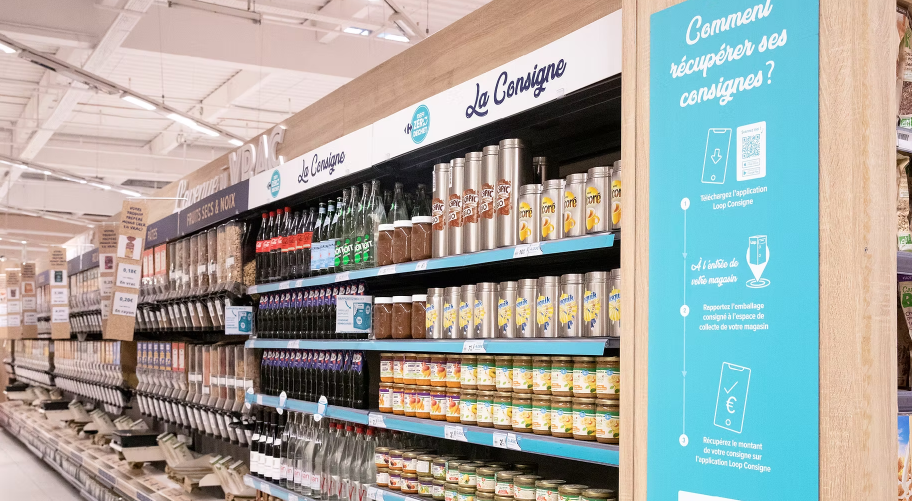
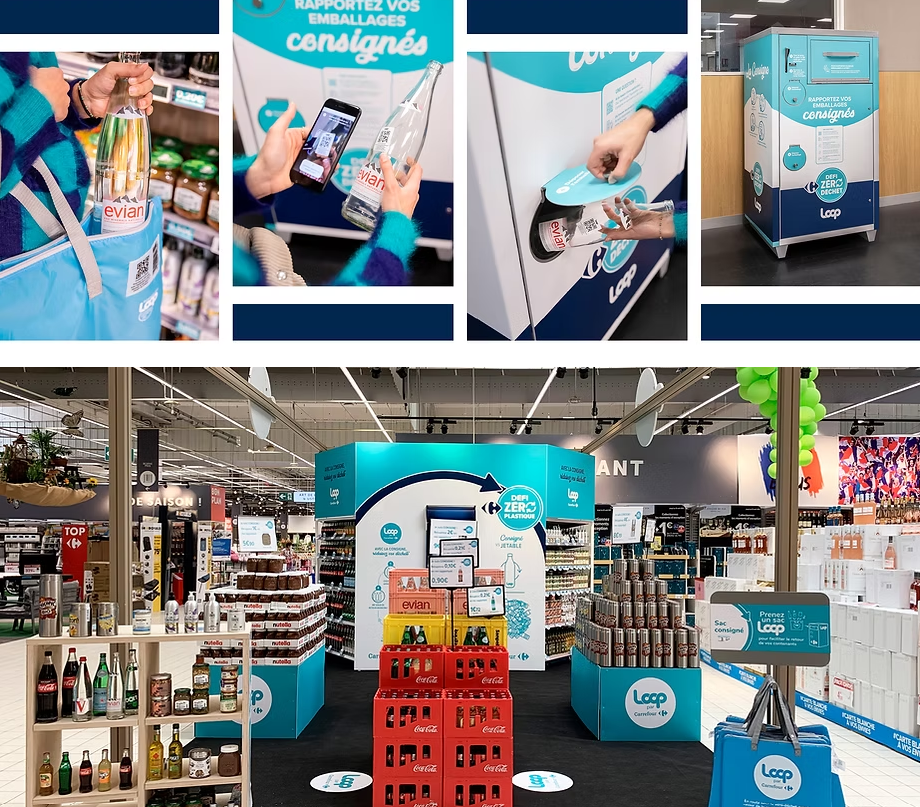
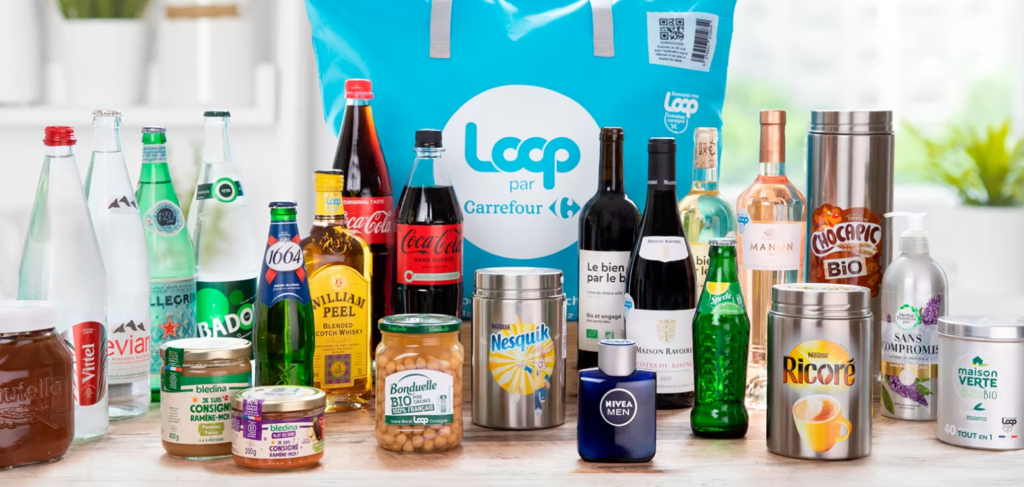
The Loop model implemented within the Carrefour network – “prefill reuse,” meaning pre-filling of packaging – is one of the best examples of the system. The principle behind this model is that, from the very outset, packaging is treated not as waste but as a reusable asset that remains on the company’s balance sheet.
The system’s innovation is not limited to the packaging’s physical durability and design. The main principle is that the entire system is built on closed-loop logic. The customer buys a product whose price includes a deposit intended for the packaging; after use, they return the empty container to a special collection point, after which the packaging is sterilised, undergoes strict quality control, and is refilled with the product.
This process represents the full and seamless integration of so-called reverse logistics into the traditional supply chain. Standardisation of packaging is particularly important for optimising the system. Packaging of the same shape and size radically reduces operating costs, since transporting and washing it in industrial equipment is far simpler, ultimately extending its life cycle.
Despite the system’s efficiency, Carrefour’s model also has certain limitations. The system is strictly dependent on the scale of operations. Since managing infrastructure and inventory requires a continuous workload, the system is economically effective only for fast-moving products. A reduction in scale, in turn, leads to an increase in operating costs, which makes the business model unprofitable.
Experimental Circular Models - Tesco
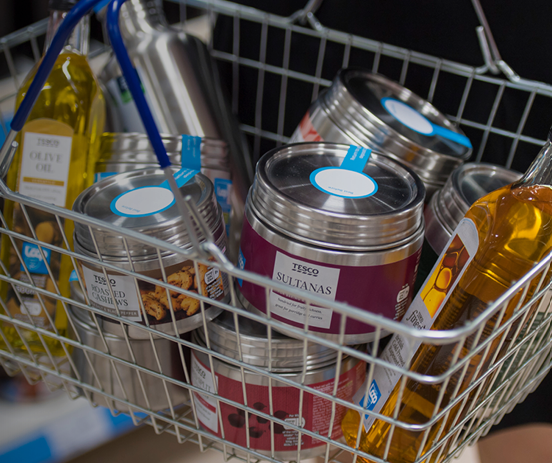
Tesco’s strategy is more experimental – here, various reuse practices are tested directly in the live market. Tesco’s main role is to search for the standards that the entire industry will use in the future. By taking on operational risks and costs itself, the company is creating a precedent for implementing an economically sound and scalable circular system.
Within the framework of the 4R (Remove, Reduce, Reuse, Recycle) strategy, reuse is viewed not as an isolated solution but as part of a complex, multi-stage transformation that begins with reducing excess packaging and only afterwards considers its fundamental transformation. Tesco’s strategic approach to waste management is strictly hierarchical, where recycling is regarded only as a last resort. The process begins with the complete removal of packaging wherever possible. For example, in the case of fruits and vegetables, when this is not possible, the material is reduced to the maximum extent. The next stage is the implementation of reuse systems, which involves the use of reusable packaging, and only after all the above-mentioned stages have been exhausted is the recycling of materials that could not otherwise be kept in the cycle considered.
Tesco’s pilot projects have shown that consumer loyalty toward reusable packaging is directly proportional to the simplicity of the process. A buyer is willing to use reusable packaging only when the process is maximally intuitive and requires no additional effort. At the same time, it is critically important that economic barriers. For example, the deposit amount remains minimal.
From a technical standpoint, this is precisely where the main difficulty arises: creating a reusable system goes beyond the scope of functional design and requires a fundamental reorganisation of the entire supply chain. Synchronising product returns, sterilisation, and distribution creates operational complexity that leads to a sharp increase in costs. Accordingly, Tesco’s pilot projects demonstrate that success depends not on a single individual company, but on sector-wide coordination and the development of common standards.
Digital Optimisation of Logistics - Ocado
Ocado offers a completely different, innovative solution to the systemic difficulties mentioned above, one whose model is built on a digital solution. The online supermarket easily avoids the limitations and infrastructural barriers that pose a challenge for traditional stores.
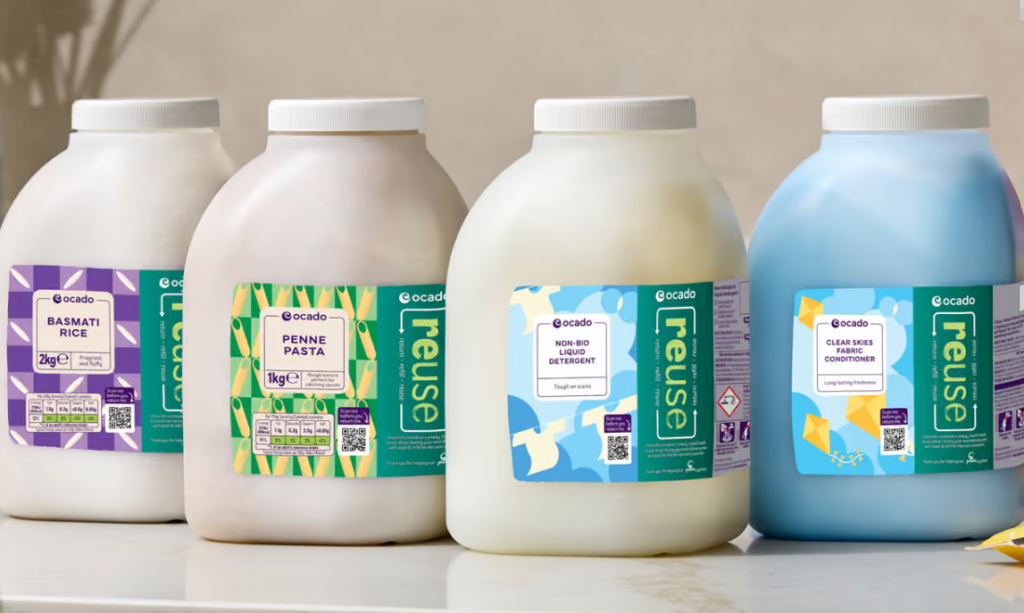
In Ocado’s model, the reusable packaging system is directly integrated into the operational chain. Instead of traditional single-use bags, the company uses special, durable packaging that goes directly to the customer’s home. The process is maximally simplified: the courier delivers the products to the door, and the customer returns the empty containers to them upon receiving the next order.
The “door-to-door” approach significantly reduces behavioural barriers. The customer does not need to collect the containers, place them in a car, or even take them to a special point at the supermarket; practically no additional action is required. Technically, this means that reverse logistics is no longer associated with additional costs and represents a natural extension of the standard delivery process.
With this approach, Ocado ensures a maximum packaging return rate, as well as a long life cycle for each unit, and improves both environmental and economic efficiency. Ocado’s example is particularly important for the industry, as it clearly demonstrates that reuse is not merely a corporate sustainability obligation, but represents a powerful, profitable tool for logistics optimisation.
Circular Vision
The different models of Carrefour, Tesco, and Ocado clearly show that the success of reusable packaging systems is not determined by advanced technology alone and requires rethinking the entire supply chain. Each player makes its own contribution to the circular transformation. Carrefour confirms that large-scale industrial capacity is the foundation of system stability, while Tesco reminds us that the success of any innovative system ultimately depends on consumer behaviour. Ocado completes this process and clearly demonstrates how data analytics and digital logistics transform a traditional, linear economy into an efficient circular model.